We earn a commission when you buy through our Amazon links, at no extra cost to you. It never changes the order of the picks, and we say so when the cheaper thing is the better buy. How this works.
This is the rifle I keep coming back to. It started as a 3-gun gun and quietly turned into something with a precision habit — the stock and the bipod are the tell. It is not the lightest rifle on a stage and it is not a bench gun either, and the whole build is a set of decisions about living in that middle.
Everything below is what it actually is, with the number I actually paid beside it.
Nothing on this page sells you a gun or a gun part. Receivers, barrels, bolt carrier groups, triggers, gas blocks, suppressors and magazines are not sold on Amazon, this site monetizes through Amazon, and a buy button next to any of them would point somewhere that cannot sell you one. Those rows link to the vendor I used, unmonetized. The only things here anyone is paid for are the accessories — optics, mounts, furniture — and they are marked as such.
Both of my AR builds together. The SPR on this page is the long one at the top — the longer handguard, the fixed precision stock and the bipod are what separate it from the short 300 BLK gun below it.
These are historical prices — what these parts cost me when I bought them, not what they cost today. None of the vendor links above is an affiliate link and we earn nothing if you use one; they are here because "where I actually bought it" is the useful part.
Why 16 inches of .223 Wylde, midlength
Three separate decisions live in that one line on the parts list, and they are the whole character of the rifle.
.223 Wylde
A Wylde chamber is the compromise chamber. It will safely run 5.56 NATO pressure while keeping a tighter leade than a 5.56 chamber, which is what gives it better accuracy potential with match .223 ammunition. You are not giving up the ability to shoot cheap 5.56, and you are gaining something when you feed it good ammunition. For a rifle that has to shoot a match on Saturday and paper on Sunday, that is exactly the right trade.
Stainless
Stainless barrels are the accuracy choice in this class and the maintenance cost is that they are less corrosion-resistant than a nitrided chrome-moly barrel, not more, despite what the name suggests to people. Ballistic Advantage publishes the profile and twist for each of their barrels on the product page, and that page is the only place I would take those numbers from — see the note at the end about what I refuse to publish from memory.
Midlength gas
This is the one that matters most and gets discussed least. A 16-inch barrel is usually sold with a carbine-length gas system. A midlength system moves the gas port further down the barrel, where pressure is lower and has had longer to even out. The rifle unlocks later and more gently. What you feel is a softer push and a sight picture that settles faster between shots, which on a stage is the difference between confirming your hit and waiting for the reticle to stop moving.
Sixteen inches with midlength gas is the sweet spot: you get the softer cycle without the extra length and muzzle weight of an 18-inch gun. The wider argument about barrel length for competition is on what makes a good 3-Gun rifle.
The PRS Lite and the bipod are the precision half
Most 3-gun rifles wear a collapsible carbine stock, because you are running with them. This one wears a fixed precision stock with an adjustable comb and length of pull, and a bipod hangs off the front.
That is a deliberate bias. An adjustable comb means my eye lands in the same place behind an 8x optic every time, which is the single biggest thing you can do for repeatable precision shooting and is completely absent from a standard carbine stock. The bipod means that when a stage gives me a distant target and something to lie down behind, I can actually use the accuracy the barrel has.
The cost is weight and length at the back of the rifle, and a stock that does not collapse for transport. I decided that was worth it. If your matches are all close and fast, buy the carbine stock and spend the difference on ammunition.
Why the LE145 trigger
Ninety-seven dollars is the cheap end of drop-in competition triggers and the LE145 is a single-stage unit at a duty-appropriate weight rather than a two-pound competition trigger. That is the point.
I did not want the lightest trigger available. A rifle that gets carried, staged, moved with and shot on the clock is a rifle where a very light trigger is a liability, and a clean single-stage break at a sensible weight gives me almost all of the improvement over the mil-spec trigger it replaced with none of that risk. The anti-walk pins are there because a drop-in cassette that shifts is a drop-in cassette that eventually stops working.
What I am not going to publish is a measured pull weight. I have not put this trigger on a gauge, the manufacturer states 4.5 pounds, and the difference between a stated figure and a measured one is exactly the kind of thing this site does not blur.
The comp, and the honest cost of it
The Dynacomp Extreme is a compensator, and it does what compensators do: redirect gas to fight muzzle rise so the rifle tracks flatter between shots. On a stage that is real time saved.
It is also loud sideways. That is not a minor footnote — the person standing next to you at a club match is a Range Officer with his head a few feet from your muzzle, and an aggressive comp is a genuine courtesy problem. It is also the best argument I know for proper hearing protection, which we cover on eye and ear protection for competition.
The money
The parts total $1,863. Two things about that number.
First, the optic is 22% of it. Four hundred and fifteen dollars of an eighteen-hundred-dollar rifle went on glass and a mount, and I would do that again before I would spend it on a lighter handguard. The glass is what you look through on every single shot.
Second, the barrel package is 23% of it. The Ballistic Advantage line item was a barrel, a bolt carrier group and a gas tube and block together, which is why it reads high next to the receivers. Between the barrel and the optic, roughly 45% of this rifle is the two components that decide whether it shoots well. The receivers, the furniture and the charging handle are the other 55%, and they decide whether it is pleasant to use.
That is not a bad rule for a first build: put the money in the barrel and the glass, buy the rest on function.
What I would tell you to check before copying it
The gas block and barrel have to agree. Journal diameter and gas port position are barrel-specific. Buy the barrel first, then the block.
The same optic argument on the bigger platform is worth reading if you are building or buying a .308 gas gun: scopes for an AR-10 goes through eye relief, the cantilever mount and the elevation ceiling. And the part of an AR build people spend nothing on and then regret — a sling that actually adjusts.
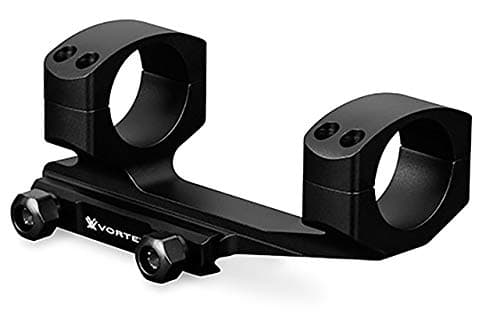
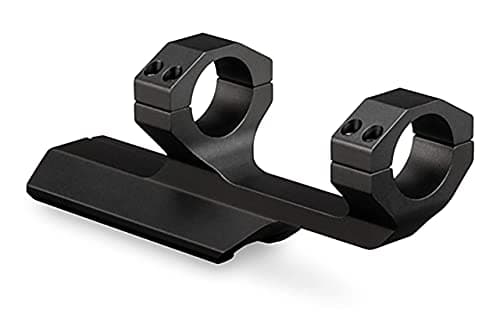
The mount is the part that must not move, and this is the tier where they stop moving. The cantilever gets the scope far enough forward for a natural head position on an AR.
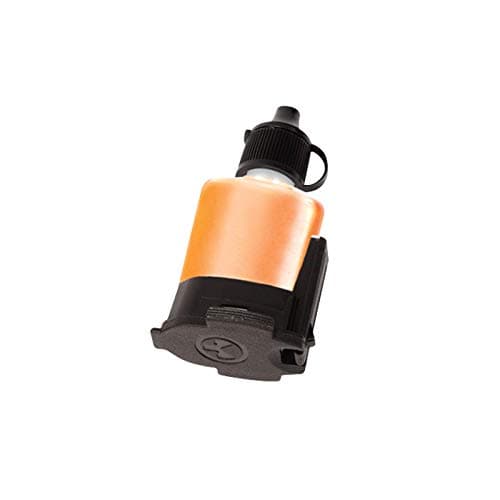
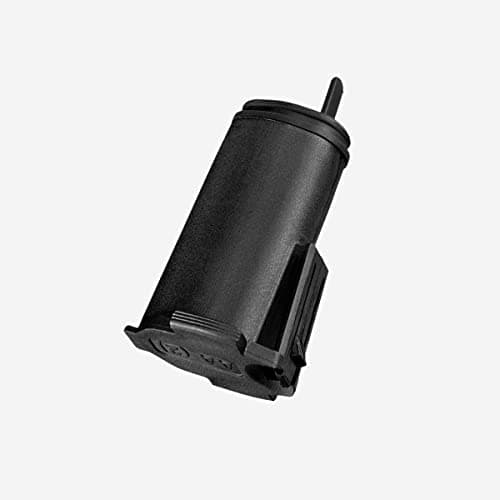
A half-ounce oil bottle that lives in the hollow of the pistol grip you already own. Fifteen dollars to never be the guy at a match with a dry bolt and no oil.
#ad · Live prices from the Amazon Creators API, as of October 19, 2026. Where we have no verified live price we show none — a gap beats a number that has rotted.
In detail
The picks, in full
01
No image
Best overall
Vortex Strike Eagle 1-8x24 (BDC3 MOA)
I run this one
The scope on this rifle. He paid $415 for the SE-1824-2 with a mount; the scope alone is what is priced here.
The mount is the part that must not move, and this is the tier where they stop moving. The cantilever gets the scope far enough forward for a natural head position on an AR.
Zero retention
9
Build quality
9
Height options
6
Value
7
What's good
+Cantilever design puts the eye box where your head naturally lands on an AR stock
+Machining and fastener quality are visibly a step above the budget mounts
+Covered by the same Vortex warranty as the optic
What's not
−Costs about as much as a budget scope
−One height only — check it against your cheek weld before ordering
Skip it if…
…the rifle is a starter build. A cheaper cantilever will hold a zero if you torque it properly; this is what you buy when you have stopped wanting to think about it.
1/2 oz bottleFits MIAD and MOE gripsSealed coreBlack
8.0/10
A half-ounce oil bottle that lives in the hollow of the pistol grip you already own. Fifteen dollars to never be the guy at a match with a dry bolt and no oil.
Usefulness
8
Fit
8
Build quality
7
Value
9
What's good
+Uses dead space that is otherwise doing nothing
+The oil is on the rifle, which is where you need it, rather than in a bag at the truck
+Drops in without tools beyond the grip screw
What's not
−Only fits Magpul MIAD and MOE grips
−Half an ounce is a top-up, not a service
Skip it if…
…you run a different grip. There is nothing clever here that transfers — it is a shaped plug for a specific hollow.
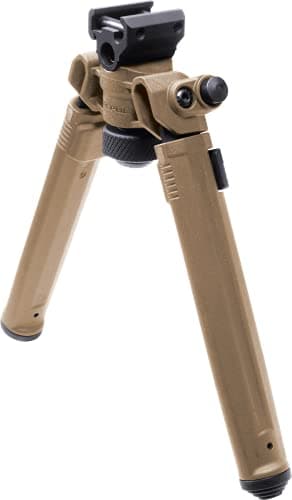
Not much of it, and that is the honest state of things rather than an oversight. The picks above are the parts of this rifle that Amazon genuinely carries: the Strike Eagle, a cantilever mount, the 1913 bipod and the lubrication grip core.
Everything else is either a regulated part we would not link anywhere, or a Magpul line Amazon does not stock. Live searches during this build-out came back empty for the PRS Lite stock, the MOE+ grip, the M-LOK handstop kit and the Aero BREACH charging handle. Buy those from Magpul, from Aero, or from a dealer — and if you find a marketplace listing claiming to be one of them at a suspicious price, that is exactly the situation the price should be telling you about.
Where the optic money goes
I paid $415 for the Strike Eagle 1-8x and a mount together. Bought separately today the scope and a good cantilever mount land in the same territory, and the live prices above will tell you where they actually sit right now rather than where they sat when I bought.
If you are choosing between the 1-6x and the 1-8x, the shorter answer is on best LPVOs for 3-Gun: 1-6x for most club shooters, 1-8x when your matches have steel far enough out that six power is the limiting factor. The wider Vortex line-up is in the Vortex owner's guide.
How these were picked
3 of these are mine. The rest are research, and I say which is which.
Anything carrying the "I run this one" stamp above is gear I actually own and use, and I write about it in those terms. What I do not do is invent numbers to dress that up — there are no group sizes, round counts or chronograph figures on this site, because I did not record them. For everything without the stamp: I read the manufacturer's published specification, compile the numbers that decide the purchase, do the arithmetic in the open, check the live price, and name one product to skip. Those scores are judgments against a published rubric, not measurements I took.
Questions
Frequently asked
Why not just buy a complete rifle?+
You can, and for most people that is the right answer. I built this one because I wanted a specific barrel, a specific gas length and a specific trigger, and the complete rifles at this price do not come configured that way. Building does not save money — this one certainly did not.
Is .223 Wylde worth it over 5.56?+
If you shoot match .223 ammunition, yes. If you shoot bulk 5.56 exclusively, the advantage largely disappears and you have paid for a chamber you are not using. It was worth it here because the whole point of the build is a rifle that will shoot better than a general-purpose AR when I feed it properly.
Would you run the PRS Lite again on a 3-gun rifle?+
On this rifle, yes — the adjustable comb behind an 8x optic is worth the weight to me. On a pure run-and-gun gun, no. If your stages are close, fast and full of movement, a collapsible carbine stock is the better tool and it is not close.
Why aren't there measured accuracy numbers on this page?+
Because I have not recorded any. No group sizes, no chronograph figures, no test protocol. This site does not publish measurements it did not take, and owning a rifle does not change that — it is the same rule as everywhere else, explained on how we pick.
We do not run a testing lab and we do not pretend to. Where a measured number came from a manufacturer's published specification or someone else's lab, we name them and link them. Where we could not verify something, we say so on the page rather than quietly leaving it out. Read the full method.