Skip to content
Steve's Outpost

Section 01 · Knives & EDC

Best Rechargeable Tactical Flashlights

Lumen inflation is worse in this category than in any other on this site. Here is how to read past it, and the lights that survive being read properly.

By Stephen V.Updated How we pick
#ad

We earn a commission when you buy through our Amazon links, at no extra cost to you. It never changes the order of the picks, and we say so when the cheaper thing is the better buy. How this works.

Somewhere on this page there is a thirty-dollar light claiming ten thousand lumens, sitting next to a hundred-and-twenty-dollar light claiming two thousand eight hundred. One of those numbers was measured against a published standard and one of them was not, and if you cannot tell which, the flashlight market will take your money for the next decade.

So this page leads with the measurement problem, because the measurement problem is the buying advice. Once you know what to compare, the ranking mostly writes itself.

Three numbers, and only one of them is on the box. FL 1 lumens are measured at the front of the lens thirty seconds after switch-on, to the ANSI/NEMA standard. A marketing lumen number is usually the emitter's theoretical maximum at the instant of switch-on, which nobody ever sees. Sustained output is what the light holds after it heats up — every small high-output light steps down, and the honest makers publish the curve. Candela is beam intensity, and it is what decides how far the light reaches: a 2,000 lumen flood can be less useful at distance than a 600 lumen thrower. Everything on these pages is ranked on the second and third of those, never the first.

Why lumen inflation is worse here than anywhere else

Two things make flashlights uniquely bad for this. The first is that lumens are invisible: you cannot look at a beam and know whether it is 800 or 1,600, and human vision is logarithmic, so doubling the output looks like a modest increase rather than twice as much. A buyer has no way to audit the claim by using the product, which is not true of a knife or a tent.

The second is that there is a technically-true-ish number available to quote. An LED emitter has a rated maximum output at a given current, and a manufacturer can print that figure without ever measuring the assembled light. It ignores the reflector, the lens, the driver and the thermal design — all of which take real light away. The gap between emitter rating and FL 1 measured output is routinely a factor of two or more.

The ANSI/NEMA FL 1 standard exists precisely to close that gap. It specifies how output, beam distance, runtime and impact resistance are measured. Manufacturers who follow it can be compared to each other. Manufacturers who do not, cannot be compared to anything, and that absence is the most useful specification on the listing.

The thermal step-down nobody advertises

Every light on this page will produce its headline output. Almost none of them will produce it for more than a couple of minutes.

The reason is physics rather than deception. An LED at high current is mostly a heater, and a light small enough to carry has nowhere to put that heat. So the driver steps the output down to protect the emitter — typically starting somewhere between thirty seconds and three minutes in, and settling at a fraction of the peak. That fraction is the number that matters, because it is the light you actually have while you are using it.

The tell is simple: does the manufacturer publish a runtime chart? Fenix, Streamlight and Nitecore do. A chart with a visible cliff in the first two minutes is not a confession, it is an honest description of a real light. A single number with no chart is the thing to be suspicious of.

Candela, and why a dimmer light can reach further

Lumens measure total light output in every direction the light throws it. Candela measures intensity in the middle of the beam. They are different questions and they have different answers.

A wide flood beam spreads its lumens over a large area, which is what you want for working on something in front of you. A tight beam concentrates them, which is what you want for identifying something a hundred yards away. This is why Streamlight and SureFire publish candela alongside lumens and why the enthusiast brands increasingly do too — without it you genuinely cannot predict how a light will behave.

The practical rule: for close work, buy lumens. For distance, buy candela. If a listing gives you only lumens and you need distance, you are guessing.

These are researched picks, not lights I carry. Elsewhere on this site there are pages about gear I actually own, and those are written in the first person because they have earned it — my rifles, my truck, my computer. Flashlights are not one of those categories yet. So this cluster does what the rest of the site does when I have not handled something: reads the published specifications, compares the numbers that are actually comparable, says which manufacturers publish enough to be checked, and names one to skip.

Where this fits with the rest of a pocket

A light is the third item in the pocket trio — the other two being a knife and a wallet, and both of those have their own pages here. If you are building the whole loadout rather than replacing one item, the complete minimalist EDC page puts them together, and best EDC flashlights covers the keychain and pocket end of the category in more detail than this page does.

The short answer

Quick picks

#ProductBest forScorePrice
01
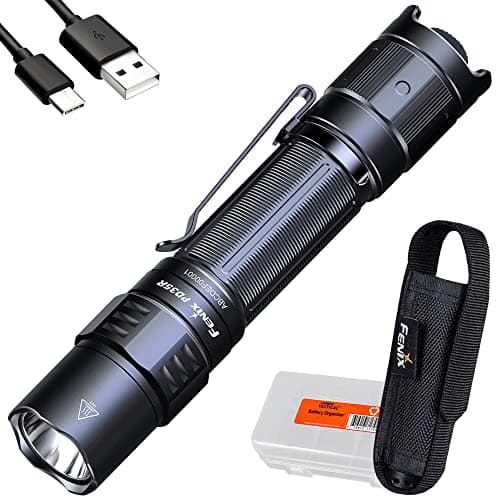
Fenix Fenix PD36R Pro (2,800 lumens, 21700, USB-C)
Fenix PD36R Pro (2,800 lumens, 21700, USB-C)

The one to buy if you are buying once. Fenix publishes a full runtime chart for it, which is the single most useful thing a flashlight maker can do and most of them will not.

Best overall
8.8
$120.45Amazon (affiliate link)
02
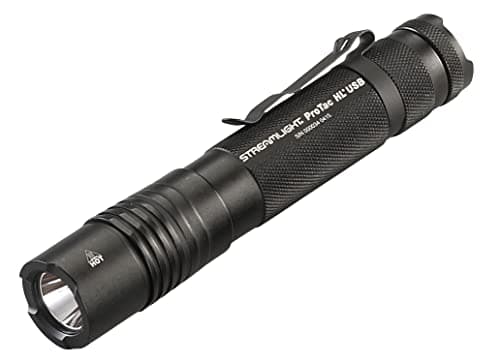
Streamlight Streamlight ProTac HL USB Rechargeable (88052)
Streamlight ProTac HL USB Rechargeable (88052)

The one that turns up on actual duty belts. Streamlight's numbers are conservative, its warranty process is unglamorous and functional, and the light is close to unkillable.

Best duty-grade
8.8
$114.36Amazon (affiliate link)
03
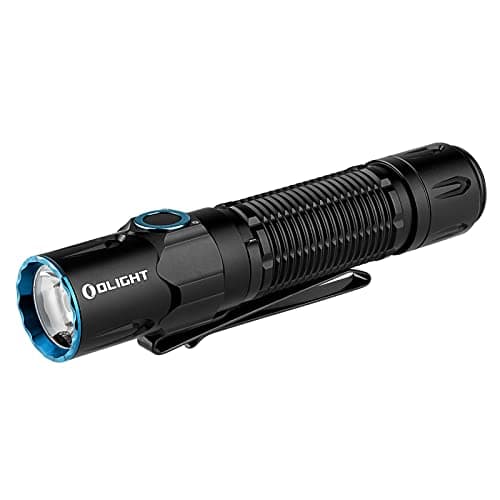
Olight Olight Warrior 3S
Olight Warrior 3S

The best interface in the category. A tail switch for output and a side slider for mode, plus proximity sensing that steps it down when the beam is blocked — which sounds like a gimmick until it saves your light in a bag.

Best one-handed operation
8.4
$119.95Amazon (affiliate link)
04
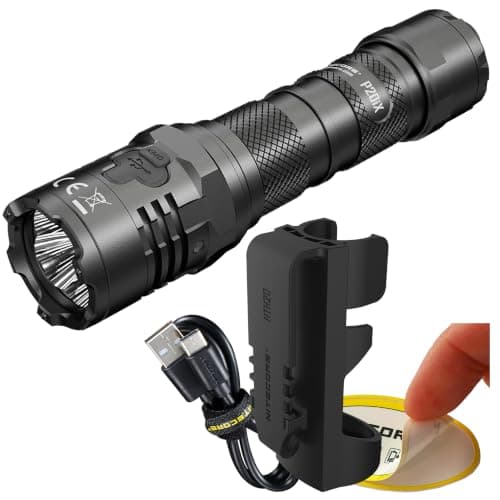
Nitecore Nitecore P20iX (4,000 lumens)
Nitecore P20iX (4,000 lumens)

Four thousand lumens out of a light this size, and an honest read of that means: for a short time. Buy it for the burst if the burst is what you need, and read the sustained figure before you decide it is.

Highest output
8.2
$119.95Amazon (affiliate link)
05
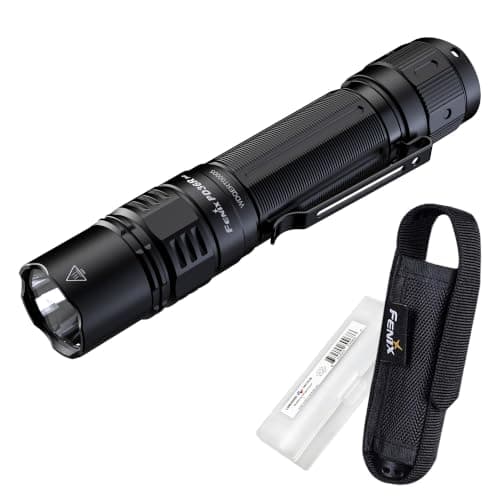
Fenix Fenix PD35R (1,700 lumens)
Fenix PD35R (1,700 lumens)

The sensible amount of light for real money. Seventeen hundred lumens is more than most people ever need and this holds a usable fraction of it for a long time.

Best value
8.8
$90.45Amazon (affiliate link)
06
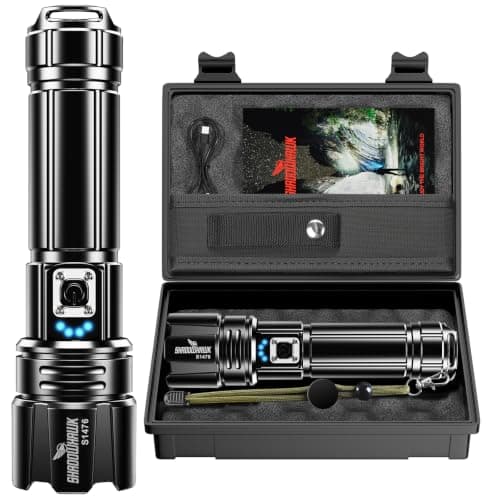
Unbranded Generic 30W "10,000 Lumen" Rechargeable Flashlight
Generic 30W "10,000 Lumen" Rechargeable Flashlight

This is the listing this whole page exists to explain. Ten thousand lumens for thirty dollars is not a bargain, it is a number with no measurement standard behind it.

Skip this one
2.8
$29.99Amazon (affiliate link)

#ad · Live prices from the Amazon Creators API, as of Sep 5, 2026. Where we have no verified live price we show none — a gap beats a number that has rotted.

In detail

The picks, in full

01
Fenix Fenix PD36R Pro (2,800 lumens, 21700, USB-C)

Best overall

Fenix PD36R Pro (2,800 lumens, 21700, USB-C)

2,800 lumens (FL 1)21700 cellUSB-C on boardDual tail switch
8.8/10

The one to buy if you are buying once. Fenix publishes a full runtime chart for it, which is the single most useful thing a flashlight maker can do and most of them will not.

Sustained output
9
Published data
10
Build quality
9
Interface
8
Value
8

What's good

  • Fenix publishes runtime charts rather than one headline number, so you can see the thermal step-down instead of discovering it
  • 21700 cell means real capacity — the sustained output holds for a usable length of time rather than a novelty burst
  • USB-C charging in the light, so there is no separate charger to lose
  • Dual tail switch gives momentary and mode selection without a mode-cycling ritual

What's not

  • The 2,800 lumen figure is a turbo number and it will not hold there — read the chart, that is why it exists
  • Big enough that it is a belt or bag light, not a pocket light
  • Proprietary-ish cell with the charge port in it; a generic 21700 works but you lose onboard charging

Skip it if…

you want something that lives in a front pocket all day. This is a duty-size light and it feels like one. Buy an EDC-size rechargeable instead and accept less output.

$120.45See it on Amazon (affiliate link)

Price as of Sep 5, 2026. Prices move — Amazon's is the one that counts.

#ad · we may earn a commission from this link to Fenix PD36R Pro (2,800 lumens, 21700, USB-C)

02
Streamlight Streamlight ProTac HL USB Rechargeable (88052)

Best duty-grade

Streamlight ProTac HL USB Rechargeable (88052)

FL 1 rated outputUSB rechargeableTen-Tap programmingAnti-roll head
8.8/10

The one that turns up on actual duty belts. Streamlight's numbers are conservative, its warranty process is unglamorous and functional, and the light is close to unkillable.

Sustained output
8
Published data
10
Durability
10
Interface
9
Value
7

What's good

  • Streamlight publishes FL 1 output, candela and runtime as a matter of course — you are not guessing
  • Ten-Tap lets you set it to high-only, which is what most people actually want and almost nobody offers
  • It is the brand that fleet and agency buyers standardize on, and that is a durability signal you cannot get from a spec sheet
  • Runs on the rechargeable cell or on CR123A primaries in a pinch

What's not

  • Output is behind the enthusiast brands at the same money, because the number is honest
  • Micro-USB on some production of this model rather than USB-C — check the listing photo
  • The interface is programmable, which means it can be programmed wrong by somebody else

Skip it if…

you want the biggest number for the money. Streamlight will lose that comparison on paper every time and win it in a parking lot at 2am.

$114.36See it on Amazon (affiliate link)

Price as of Sep 5, 2026. Prices move — Amazon's is the one that counts.

#ad · we may earn a commission from this link to Streamlight ProTac HL USB Rechargeable (88052)

03
Olight Olight Warrior 3S

Best one-handed operation

Olight Warrior 3S

High-output turboMagnetic chargingProximity sensorTail and side switch
8.4/10

The best interface in the category. A tail switch for output and a side slider for mode, plus proximity sensing that steps it down when the beam is blocked — which sounds like a gimmick until it saves your light in a bag.

Sustained output
8
Published data
8
Interface
10
Build quality
8
Value
8

What's good

  • Genuinely thought-through controls that you can work in gloves without looking
  • The magnetic charge cable is the fastest, least fiddly charging in the category
  • Proximity sensor drops output when the head is against fabric, which is how lights cook themselves in bags
  • Olight publishes step-down behavior rather than pretending it does not happen

What's not

  • Proprietary magnetic charging means a specific cable you now have to own and not lose
  • Turbo is a short window before a substantial step-down — the sustained figure is the real one
  • Olight's release cadence is fast, so the model you buy is superseded quickly

Skip it if…

you need to run standard cells and standard charging. The magnetic system is excellent and it is a lock-in, and on a light you depend on that is a real consideration.

$119.95See it on Amazon (affiliate link)

Price as of Sep 5, 2026. Prices move — Amazon's is the one that counts.

#ad · we may earn a commission from this link to Olight Warrior 3S

04
Nitecore Nitecore P20iX (4,000 lumens)

Highest output

Nitecore P20iX (4,000 lumens)

4,000 lumens turbo21700 i-series cellUSB-C on boardTactical tail switch
8.2/10

Four thousand lumens out of a light this size, and an honest read of that means: for a short time. Buy it for the burst if the burst is what you need, and read the sustained figure before you decide it is.

Peak output
10
Sustained output
7
Published data
8
Interface
8
Value
8

What's good

  • The turbo output is genuinely enormous for the format
  • USB-C directly in the cell, so charging needs nothing but a phone cable
  • Dedicated tactical interface with instant strobe, which is the point of the model line
  • Nitecore publishes both turbo and sustained figures, so the step-down is not a surprise

What's not

  • The gap between the headline number and the sustained number is the largest on this page — that is physics, not a defect, but it is the whole reason to read the chart
  • Gets hot fast at the top setting, as anything this bright in this size must
  • The i-series cell is a Nitecore-specific format for the onboard charging to work

Skip it if…

you want a light that holds its headline number. Nothing this size does, and this one advertises the largest number of any light here. Buy the Fenix or the Streamlight and be happier with what it sustains.

$119.95See it on Amazon (affiliate link)

Price as of Sep 5, 2026. Prices move — Amazon's is the one that counts.

#ad · we may earn a commission from this link to Nitecore P20iX (4,000 lumens)

05
Fenix Fenix PD35R (1,700 lumens)

Best value

Fenix PD35R (1,700 lumens)

1,700 lumens (FL 1)USB-C rechargeableDual switchPocket-clip capable
8.8/10

The sensible amount of light for real money. Seventeen hundred lumens is more than most people ever need and this holds a usable fraction of it for a long time.

Sustained output
8
Published data
10
Size
8
Value
9

What's good

  • Meaningfully cheaper than the flagship and gives up far less than the price gap suggests
  • Smaller and lighter than the 21700 lights, so it actually gets carried
  • Same Fenix habit of publishing real runtime data

What's not

  • Smaller cell means less total runtime than the 21700 lights above
  • Not as bright, which matters if throw is your actual requirement
  • Dual-switch interface takes a few sessions to become automatic

Skip it if…

you specifically need distance. This is a well-balanced beam rather than a thrower, and candela is the number to compare, not lumens.

$90.45See it on Amazon (affiliate link)

Price as of Sep 5, 2026. Prices move — Amazon's is the one that counts.

#ad · we may earn a commission from this link to Fenix PD35R (1,700 lumens)

06
Unbranded Generic 30W "10,000 Lumen" Rechargeable Flashlight

Skip this one

Generic 30W "10,000 Lumen" Rechargeable Flashlight

Claimed 10,000 lumensNo FL 1 rating publishedNo candela figure publishedNo runtime chart
2.8/10

This is the listing this whole page exists to explain. Ten thousand lumens for thirty dollars is not a bargain, it is a number with no measurement standard behind it.

Published data
1
Sustained output
3
Build quality
3
Value
4

What's good

  • It is cheap, and it will produce light
  • For a glovebox or a junk drawer, where the specification does not matter, it is fine

What's not

  • There is no published FL 1 rating, no candela figure and no runtime chart, so there is no way to compare it to anything on this page
  • Claimed output at this price is typically the emitter's theoretical maximum, not measured lumens at the lens
  • Thermal management at this price is usually a claim rather than a design, so the step-down is steep and fast
  • Unbranded listings change contents without changing the listing, so the one you get may not be the one that was reviewed

Skip it if…

you are buying it because the number is bigger than the Fenix. That is precisely the wrong reason and it is the reason this entry is here. If you want a cheap light that is honest about what it does, buy a Wurkkos or a Sofirn — those publish real figures at real prices.

$29.99See it on Amazon (affiliate link)

Price as of Sep 5, 2026. Prices move — Amazon's is the one that counts.

#ad · we may earn a commission from this link to Generic 30W "10,000 Lumen" Rechargeable Flashlight

How to buy without being lied to

Look for a runtime chart before you look at anything else

If the manufacturer publishes one, you can see the step-down and compare honestly. If they do not, you are being asked to trust a single number with no method behind it. This one test eliminates most of the category in about ten seconds.

Compare the sustained figure, not the turbo figure

Turbo is a marketing mode with a legitimate use — a short burst to identify something. The number you will live with is the high or medium setting the light holds indefinitely. Ranking on turbo is how people end up disappointed by a light that met its specification.

Decide whether you need throw before you shop

Close work wants flood; distance wants candela. Most people buying a "tactical" light are actually buying a general-purpose light and would be better served by a balanced beam than by either extreme.

Prefer standard cells and standard charging where you can

Onboard USB-C is convenient. Proprietary magnetic docks are more convenient still, right up until you are somewhere without the dock. A light that takes a common cell and charges over a common cable is one you can keep running anywhere — see the battery platform page for what that actually means.

Buy a cheap light from a brand that publishes numbers

The alternative to an expensive light is not an unbranded listing with a fictional lumen claim. It is Wurkkos or Sofirn, who publish real specifications at real prices. There is no longer any reason to buy fiction to save money.
How these were picked

I haven't handled these. Here's what I did instead.

Everyone in this category says they tested twenty of these. I haven't tested any, and I say so. What I do instead: read the manufacturer's manual and published specification, compile the numbers that decide the purchase, do the arithmetic in the open, check the live price, and name one product to skip. The scores above are judgments from that research against a published rubric — they are not measurements I took, because I do not have a lab and I am not going to pretend otherwise.

Questions

Frequently asked

What are ANSI FL 1 lumens?
The ANSI/NEMA FL 1 standard defines how flashlight performance is measured — output taken at the front of the lens thirty seconds after switch-on, plus beam distance, runtime, impact and water resistance. It makes two lights comparable. A lumen figure quoted outside that standard is usually the LED emitter's theoretical maximum, which is typically about double what the finished light actually produces.
Why does my flashlight get dimmer after a minute?
Thermal step-down, and it is normal. High output makes heat, a pocket-size body cannot shed it, so the driver reduces output to protect the emitter. Manufacturers who publish runtime charts show you exactly when and how far. The sustained level after step-down is the honest number to compare between lights.
Is a 10,000 lumen flashlight for $30 real?
No. There is no measurement standard behind that number, no candela figure to check it against and no runtime chart to show what it holds. If you want a genuinely good cheap light, buy from a brand that publishes specifications — Wurkkos and Sofirn both do, at similar money.
Lumens or candela — which should I compare?
Both, for different jobs. Lumens is total output and predicts how well a light fills a space at close range. Candela is beam intensity and predicts how far it reaches. For distance work, candela is the number that matters and a lower-lumen thrower will beat a higher-lumen flood every time.
Do I need a tactical light or just a bright flashlight?
For most people, a bright flashlight. "Tactical" in this category usually means a tail switch, an instant-maximum mode and a body that tolerates abuse. Those are useful features and none of them are magic. Buy the interface you will actually use.

Keep reading

Receipts

Sources

We do not run a testing lab and we do not pretend to. Where a measured number came from a manufacturer's published specification or someone else's lab, we name them and link them. Where we could not verify something, we say so on the page rather than quietly leaving it out. Read the full method.